 11
11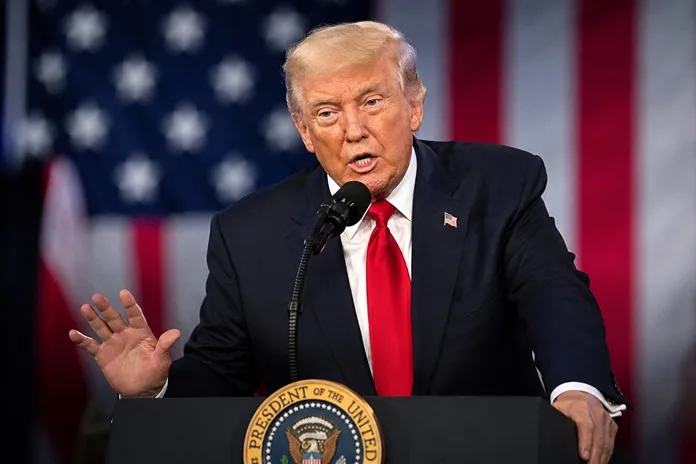
US President Donald Trump has postponed a planned military strike on Iran to allow ongoing diplomatic negotiations and backchannel talks with Tehran to continue, citing optimism that an agreement could prevent Iran from developing a nuclear weapon.
In his remarks, Trump stated he delayed the operation “for a little while, hopefully maybe forever,” following requests from Saudi Arabia, Qatar, the UAE, and other parties who believe a deal is close. He emphasized that the US military remains prepared for a “full large-scale assault” on a moment’s notice if negotiations fail. Trump noted past near-misses on agreements but described the current situation as somewhat different, adding that the US “cannot let Iran have a nuclear weapon.”
Iranian officials have confirmed talks are taking place through mediator Pakistan. President Masoud Pezeshkian said dialogue does not mean surrender and that Iran would defend its dignity and rights. According to Iranian state media, Tehran’s demands include an immediate end to conflicts on all fronts — including Israeli actions against Hezbollah in Lebanon — guarantees against further attacks on Iran, compensation for war damage, lifting the US naval blockade of Iranian ports, and respect for Iran’s sovereignty over the Strait of Hormuz.
In response, Washington reportedly presented five conditions, including limiting Iran to a single operational nuclear facility and transferring its stockpile of highly enriched uranium to the US. Leaked details cited by Saudi channel Al Arabiya suggest Iran has proposed a long-term freeze on parts of its nuclear program rather than full dismantling and is willing to transfer uranium to Russia under specific conditions instead of to the United States.
John, senior policy director at the Center for Arms Control and Non-Proliferation in Washington, assessed that the two sides remain some distance apart, with discussions conducted through intermediaries including Pakistan and Gulf states rather than direct channels. He noted that a path forward exists if both compromise: Iran would need to accept stronger constraints on its nuclear program than the 2015 deal, which Trump has criticized as insufficient, while the US would need to offer meaningful sanctions relief.
John highlighted challenges, including the absence of direct US-Iran talks and the fact that the US negotiating effort is being led by non-experts, specifically President Trump’s son-in-law and a real estate associate, rather than senior arms control diplomats. He contrasted this with the 2015 agreement, which was facilitated through European countries and Russia without direct bilateral talks. Russia could potentially play a constructive role again, including as a destination for uranium transfers, as it already holds significant stocks and such a move would not raise proliferation concerns.
Russian Foreign Minister Sergei Lavrov stated that Moscow has not been approached and is not currently part of the discussions.
The situation remains fluid amid broader Middle East tensions, with significant economic implications tied to stability in the Strait of Hormuz. Both sides have expressed openness to continued talks while maintaining firm positions on core security demands.