 11
11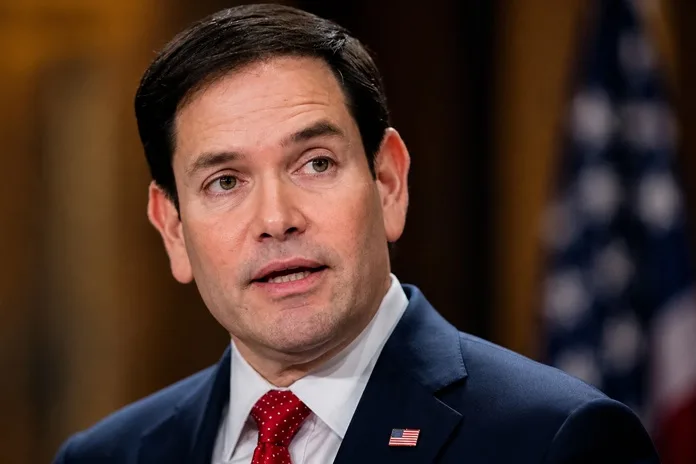
U.S. Secretary of State Marco Rubio is scheduled to make his first official visit to India more than a year and a half into his tenure, aiming to consolidate a bilateral relationship that has faced recent challenges while advancing cooperation on defense technology, energy security, and critical minerals.
The visit comes at a pivotal moment for India-U.S. ties, which have navigated strains following “Operation Synindor” — though experts say both sides remain committed to the broader strategic partnership.
According to Dhuj Shankar, who provided analysis on the upcoming trip, the primary purpose of Rubio’s visit is to consolidate the bilateral relationship. “It’s his first visit out there — it’s taken a year and a half to happen,” Shankar noted, adding that expectations for the Quad grouping will also be “a big central pillar of what he does.”
Shankar explained that despite recent challenges, a common agenda persists on maritime security, critical supply chains including critical minerals, energy cooperation, and technology. He pointed to last December’s Quad homeland security working group meeting hosted by India as evidence that working-level cooperation has continued. However, he noted that the U.S. has sought a more streamlined Quad — an approach other partners are aware of — and predicted “not just a revival of the agenda but a more focused and determined outcomes from this visit.”
On trade, Shankar highlighted several uncertainties, particularly around the U.S. tariff regime, which has faced legal challenges. He described ongoing investigations aimed at reconstructing a “high tariff wall mostly directed at China,” with India as “in some ways collateral” to that effort.
Unlike the widespread tariffs initially imposed, Shankar said the approach will likely be “more piecemeal” — sometimes sector-specific, sometimes country-specific — with the idea of imposing a relatively high tariff wall and then negotiating downward with preferred partners.
Currently, the effective tariff rate on India stands at roughly 10 percent. “Indian exporters are not unhappy with that situation,” Shankar said, but added that once the tariff regime settles, “the U.S. will be ready to negotiate. So the ball is in some ways in the United States’ court.”
Meanwhile, Shankar observed that India has fine-tuned a template for trade agreements with developed economies over the past 18 months to two years — evident in deals with the UK, the European Union, Switzerland, and Norway. “Essentially that same template will be at play with the United States, give or take,” he said, though acknowledging unique issues between the two countries will require fine-tuning.