 11
11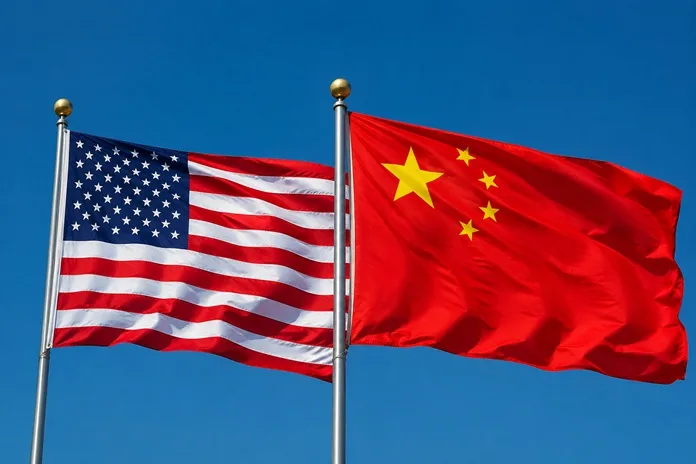
As President Donald Trump arrived in Beijing for a high-stakes summit with Chinese President Xi Jinping, Hoover Institution senior fellow Victor Davis Hanson said the U.S. should use the talks to push for greater reciprocity and challenge China’s strategic advantages.
The meeting between Trump and Xi is expected to cover a wide range of issues, including trade relations, tariffs, tensions surrounding Taiwan, and the ongoing conflict involving Iran.
Speaking during an interview ahead of the summit, Hanson argued that while opening China’s economy may be beneficial in theory, authoritarian governments rarely reform voluntarily.
“When you say it is in their interest, you are inferring it is not in the interest of the unelected autocracy that runs the country,” Hanson said, adding that regimes “almost never” change willingly.
Hanson also compared current U.S.-China relations to America’s approach toward the Soviet Union during the Cold War, warning that Washington may be taking the wrong path by maintaining extensive academic and economic exchanges with Beijing.
He proposed what he described as a policy of strict reciprocity between the two countries.
“For every student that is in the United States, [there should be] one United States student in China,” Hanson said. He also suggested matching land ownership opportunities, arguing that if Chinese entities are allowed to buy farmland in the United States, Americans should be granted the same rights in China.
Hanson said such a proposal would expose what he believes is an imbalance that favors Beijing.
During Trump’s arrival in Beijing, Chinese officials staged an elaborate welcome ceremony featuring dignitaries and children waving flags, reflecting what commentators described as a carefully orchestrated display of diplomacy.
Despite the ceremonial atmosphere, several contentious issues remain on the agenda, including tariffs, agricultural trade, Taiwan, and Iran.
Hanson said he believes the United States currently holds significant leverage over China, citing shifting geopolitical conditions and weakening Chinese influence abroad.
He claimed China had lost access to inexpensive oil supplies from Venezuela and Iran and said Beijing’s efforts to expand its presence in the Western Hemisphere had suffered setbacks in places such as Venezuela and Panama.
Hanson also argued that recent military developments, including the increasing use of drones in modern warfare and what he described as strong performances by the U.S. Navy and Air Force in recent conflicts, may have raised concerns within Chinese leadership about future military vulnerabilities.
“I don’t think they are in as strong a position as they think,” Hanson said.