 11
11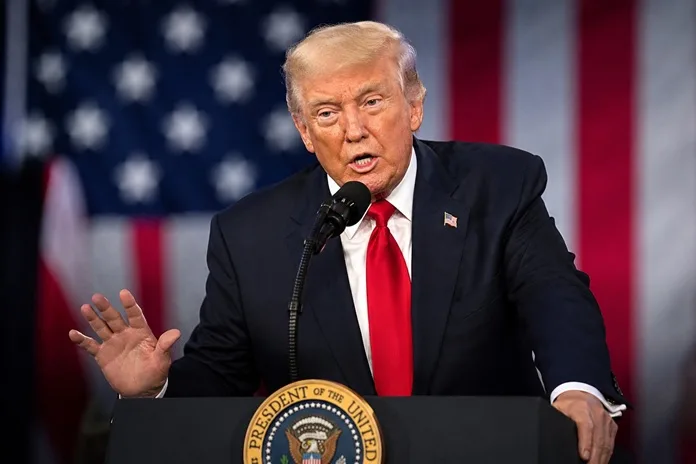
WASHINGTON — The United States and the Islamic Republic of Iran have officially reached a historic US-Iran peace accord on Sunday, bringing an immediate end to military hostilities. President Donald Trump confirmed the breakthrough, announcing that the Strait of Hormuz will reopen and the American naval blockade will be lifted, marking a significant shift in Middle East diplomacy.
Taking to Truth Social, Trump declared the deal complete, stating, “Ships of the world, start your engines. Let the oil flow,” as he authorized the toll-free opening of the strategic waterway and the immediate removal of the U.S. naval blockade. The diplomatic milestone will be formalized during an official signing ceremony scheduled for Friday, June 19, in Geneva, Switzerland. Pakistani Prime Minister Shehbaz Sharif confirmed the timeline on X, noting that both sides have declared the immediate and permanent termination of military operations on all fronts, including Lebanon. Vice President JD Vance is also confirmed to attend the Geneva summit.
While the announcement signals a major de-escalation, Gil Barndollar, a senior fellow at Defense Priorities, cautioned that the agreement is currently a 60-day temporary ceasefire designed to stabilize the region while complex issues like sanctions relief and nuclear negotiations are set aside for further discussion. According to a 14-article draft memorandum of understanding detailed by Iran’s mayor, the terms are extensive. The draft mandates the complete lifting of the U.S. naval blockade and the reopening of the Strait of Hormuz within 30 days under Iranian arrangements. It also calls for the suspension of sanctions on Iranian oil and petrochemical sales, an immediate halt to the war on all fronts, and the exclusion of Iran’s missile program and support for resistance groups from final talks. Furthermore, the agreement requires the release of $24 billion in blocked Iranian funds—half of which must be accessible before final talks begin—and stipulates that the final pact be endorsed by a UN Security Council resolution.
The financial and strategic implications of the draft are substantial. The memorandum outlines a necessity for the U.S. and its allies to represent reconstruction plans for Iran amounting to at least $300 billion. Barndollar noted that the financial commitments—which include unfreezing $12 billion immediately and another $12 billion later, alongside the massive reconstruction fund—essentially amount to paying Iran to end the war. He warned that the U.S. is entering this agreement in a far worse strategic position than when the conflict began, citing significant damage to U.S. military capabilities, readiness, and munition stockpiles over the course of the war.
A critical near-term challenge identified by Barndollar is the involvement of Israel and Lebanon. The inclusion of Lebanon in the ceasefire hinges on whether the United States can and will restrain Israeli military actions. Barndollar emphasized that Israel has the ability to scotch the deal if it continues hostilities in Lebanon, a long-standing sticking point for Tehran. To preserve the agreement, the U.S. might need to leverage its influence, potentially up to withholding direct American military support. Conversely, the deal also presupposes that Iran possesses the capability to restrain Hezbollah from initiating any further attacks against Israel.
The urgency of the agreement is heavily tied to global energy markets. As the war has dragged on, international pain from oil and gas shortages has escalated, severely impacting Africa and Asia—though the latter has been partially softened by China’s strategic petroleum reserves. With global oil draws depleting, economic pressure is poised to hit Europe and the United States. Iran, too, is feeling the squeeze of the naval blockade, having increasingly relied on overland trade routes and Caspian Sea exchanges. Despite the reopening announcement, the physical reality of the Strait remains complex. Iranian state media claims they will maintain control of the waterway with supervision from Oman, contrasting with Trump’s assertion that it is already open.
Barndollar observed that domestic gas prices have remained relatively insulated and have not fully synced with the grim realities on the ground, suggesting that a successful reopening could drive prices down further for Americans. However, practical hurdles remain, including the unknown depth of naval mines in the Strait and the time required to physically clear them within the 30-day window. As the international community awaits the June 19 signing in Geneva, the coming weeks will test whether this fragile 60-day window can successfully transition into a lasting peace.